
Since its launch in 2008, Spotify has faced a blitzkrieg of criticism from all corners of the music industry. Advocates of the industry, from major artists to financial analysts, have complained that the platform is corrupt, paying its publishers unfairly. Beyoncé has withheld her acclaimed Lemonade album from the catalogue, Thom Yorke elegantly called the company “the last desperate fart of a dying corpse” and Jay Z has launched Tidal as a counter to the behemoth platform. If musicians and recording artists — the creators of music — aren’t satisfied, then how exactly is the streaming service boosting the overall business? A recent study conducted by Goldman Sachs contends the unexpected — thanks to streaming services, the music industry is “on the cusp of a new era of growth.” The research even states that the growth of streaming will help music revenues “almost double by 2030” and that the whole music ecosystem will acquire a whopping $104 billion in just a little over a decade. So is Spotify killing the music industry or saving it? Here’s the breakdown.
Streaming Service Jargon Explained
It’s important to first understand how Spotify works for both consumer and producer. For starters, the streaming service operates on two tiers. The most popular of the two is the ad-supported tier, in which customers don’t have to pay to listen to music but have to listen to ads every couple of songs. The second option of the two, is the Premium tier, in which customers can subscribe for $9.99 per month (or less with certain discounts). On the Premium platform, subscribers experience Spotify’s full benefits and extra features, such as lack of ads, better sound quality, curated playlists, and more.

Spotify Is Not an Effective Channel for Traditional Mass Monetization
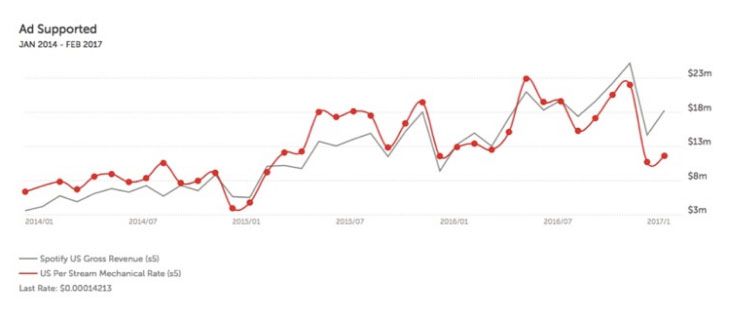
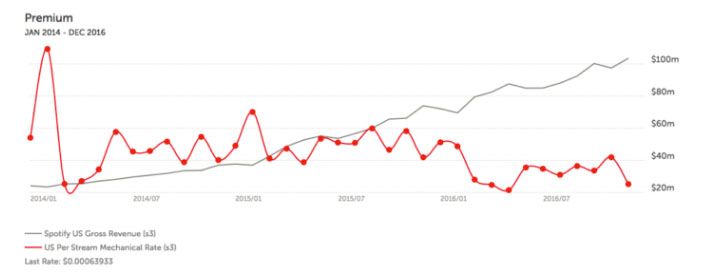
According to a report done by Audiam, Spotify’s mechanical royalty rates are decreasing on the ad supported tier. In other words, artists are supposedly losing money overall, despite the revenue growth of the platform itself. The music agency stated that in December 2016, a song on the ad based tier with 448,672 streams earned $100. In order to gain that same $100 amount in February 2017, just a month later, a song on the ad tier in would have to be played 703,581 times. Though premium streams have slightly increased, the overall trend slopes south.
Spotify Is an Effective Tool for Branding and Globalization


